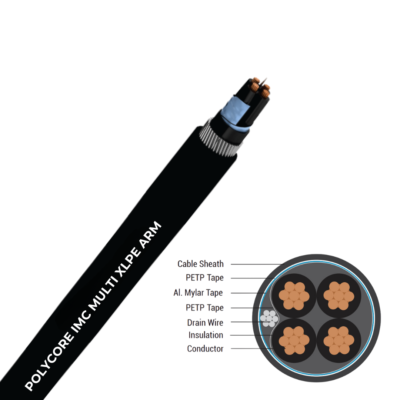
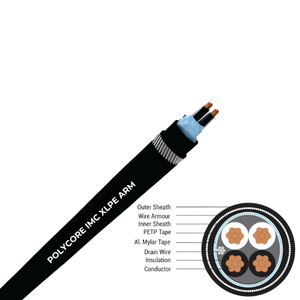
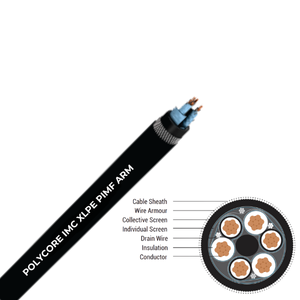
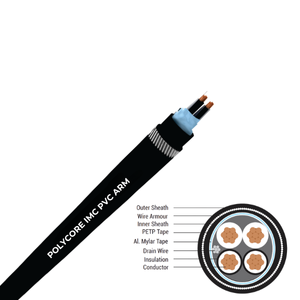
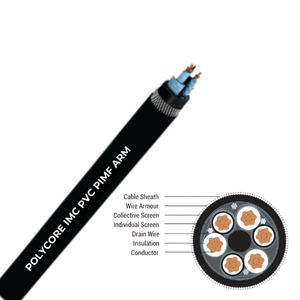
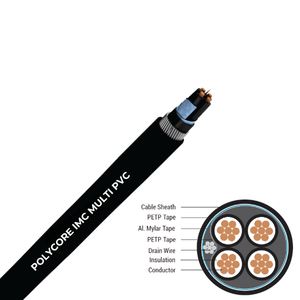
We manufacture high-strength instrumentation cables, which can be used for various instruments power supplies. We offer individual cores, pairs, triads, or units with aluminum tape andindividual and/or overall shielding up to 50 pairs.
We are also a manufacturer of shielded, screen Braided Armoured /unarmoured /flexible pair/ triad instrumentation & compensating cable.
Pair,TriadCable.
Up to and Including 24 Triad/Pair plane/tinned (Solid/stranded /Flexible) copper conductor pvc/ xlpe /pe insulated screen individual & Overall / Overall (Screen with aluminum Back Mylar tape / Steel Braiding/Copper Braiding) Armoured with steel Wire/Strip (AS per Indian standard & British standard) or Flexible pvc Sheathed Cable.
CompensatingCable.
Up to and Including 24 Pair as per ANSI MC 96.1 T, J, K, R/S, B, E Thermocouple screen individual & Overall/Overall (Screen with aluminum Back Mylar tape/Steel Braiding/Copper Braiding) Armoured with steel Wire/Strip (AS per Indian standard & British standard) or flexible PVC Sheathed Cable.
Instrumentation cables are specialized cables designed to carry low-energy electrical signals used for monitoring or controlling electrical systems and processes. These cables are crucial in ensuring accurate data transmission in environments where precision and reliability are paramount.
Key Features of Instrumentation Cables:
Shielding: Often shielded to prevent electromagnetic interference (EMI), ensuring signal integrity.
Conductor Material: Typically made of high-quality copper for better conductivity.
Insulation: Coated with materials like PVC, XLPE, or PE for temperature resistance and durability.
Armoring: Some cables are armored for additional mechanical protection.
Common Uses of Instrumentation Cables:
Process Control: Used in industries like oil & gas, petrochemicals, and power plants to monitor and control machinery and equipment.
Signal Transmission: Transmit analog or digital signals between devices such as sensors, controllers, and actuators.
Automation Systems: Integral in industrial automation for precise control of processes.
Data Acquisition Systems: Connect sensors and devices to data acquisition equipment for monitoring purposes.
Power Generation: Used in power plants for communication and control of systems.
Safety and Alarm Systems: Employed in fire detection, alarm systems, and emergency controls.
For more details on specific types of instrumentation cables –